The Spiraling Homestead

Monday, February 15, 2010

Choosing Insulation

Whether it's pink, white, yellow, or blue, all insulation is at least a little bit "green." After all, anything that saves so much energy gets high marks for environmental friendliness. But increasingly, the materials we put inside our walls and ceilings are turning a deeper shade of green, with old standbys like fiberglass and foam cleaning up their acts and natural and recycled alternatives now widely available.

To be sure, in an industry whose products have been both praised and litigated, the earth-friendliness of house insulation depends to some degree on whether you're assessing what it's made of or simply how it performs. Consider this very green bottom line from a segment of the industry, fiberglass, that has taken its share of criticism: "For every Btu of energy it takes to make this insulation, 12 Btu are saved every year," says Tom Newton, manager of advertising and promotion for manufacturer CertainTeed.

Given that other insulation products deliver similar benefits, greenness is to some extent in the eye of the beholder. For instance, some contain a high percentage of recycled material; others come in new formulations that remove or replace ingredients known to be environmentally harmful. Then there are natural products, like cotton, that get major green points because they pose no risk to people with allergies or chemical sensitivities. So while there's no set ranking system for what makes an insulation green, the good news is, wherever you want to touch down on the spectrum, there's likely to be a product that meets your needs and budget. And that should make you feel warm all over.

Insulation Overview

The chief measure of insulation performance is R-value, which is derived from standardized tests that determine how well the material resists heat flow. The higher the resistance, the higher the R-value. Current standards in most parts of the U.S. call for at least R-13 exterior walls and R-38 ceilings (the latter being higher because of heat's tendency to rise).

As a rule, the better a material performs, the more it costs, though some products are expensive simply because they occupy a tiny sliver of the market and can't offer the economies that come with high-volume production. Following is a quick snapshot of the ingredients, performance, and cost of products in insulation's two main camps, fiber and foam.


FIBER

Cellulose
Made from shredded, fluffed-up newsprint containing 85 percent recycled material and 15 percent borate-based fire retardant (borates are environmentally safe mineral compounds that also stop mold and pests). Blown in dry or sprayed on wet—damp, really—it has a higher R-value than fiberglass and costs about the same.

Cotton
Ever wonder what happens to old denim? Some of it gets turned into thick batts and is used to insulate walls and floors. Treated with the same borate fire retardant used in cellulose, shredded cotton is a popular low-chemical choice.

Fiberglass
Some might wonder how this material merits mention alongside obviously greener goods, but manufacturers have given spun glass a higher recycled content (up to 40 percent) and have taken steps to reduce the acknowledged problem of airborne fibers. Some makers have started slipping their product inside a bag—a very effective treatment until it has to be cut to fit an odd-size cavity. Comes in batts or is chopped and blown into floor and wall cavities.

Mineral wool
Made from recycled slag and mined basalt rock, mineral wool is naturally resistant to fire and pests and is highly sound absorbent. While it has been associated with the same potential airborne-fiber risk as fiberglass, one mineral wool product, a rigid-board foundation insulation, poses no such problem while providing a waterproof barrier.

Sheep's wool
Sheared from living creatures in the usual way, the cleaned fiber is formed into batts and lofty loose fill, then treated for moth- and mildew-proofing. Like cotton, wool tends to primarily be a health-related choice.


FOAM
Cementitious
Made from magnesium oxide cement mixed with water, frothed with air, and pumped into cavities, it's efficient, naturally fireproof, and resists mold and pests.

Polyicynene and polyurethane
Both of these foams are made with an oil-derived chemical, polyisocyanate, but does that necessarily erase any green tint? Maybe not, considering the energy these products save and the fact that their blowing agents—water for polyicynene, a non-ozone-depleting chemical for polyurethane—are environmentally benign. Different formulations produce two types, open-cell and closed-cell, the latter delivering a higher R-value and price.

Agricultural-based
In some formulations of polyurethane, petroleum-based ingredients are partially replaced with those from agricultural resources like soybean oil, sugar cane, and corn. Environmental benefits aside, oil's recent price trajectory makes these products even more appealing. Available as sprayed foam and, in the case of soy-based, a rigid board.

Where to Find It:

Cellulose:

Applegate Insulation
Webberville, MI
888-302-7753
applegateinsulation.com

Igloo Cellulose Inc.
Quebec
514-694-1485
cellulose.com

Cotton:

Environmental Construction Outfitters
Bronx, NY
800-238-5008
environproducts.com

Fiberglass:

CertainTeed
800-782-8777
certainteed.com

Mineral wool:

Roxul Inc.
Grand Forks, B.C.
905-878-8474
1-800-265-6878
roxul.com

Wool:

Good Shepherd Wool Insulation
Rocky Mountain House, Alb.
403-845-6705
goodshepherdwool.com

Cementitious:

Air-Krete
315-834-6609
airkrete.com

Polyicynene:

American Energy Savers
New Haven, CT
800-242-6157
aesinct.com

Polyurethane:

Foam-Tech
North Thetford, VT
802-333-4333
foam-tech.com

Soy-based:

BioBased Systems
Rogers, AR
800-803-5189
biobased.net

Labels: , ,

Friday, December 11, 2009

Heating Your Home For Less

When winter chills get your teeth chattering, one way to stay warm--and save money on heating bills---is to throw on a pair of wool socks, some sweaters, winter boots and a hat, but who wants to do that while lounging at home? We certainly don't.

Therefore, we did some digging and came up with effective ways to help you maximize warmth and reduce your monthly expenditures.

The Energy Information Administration (EIA) predicts that a typical U.S. household will spend less money on heating bills between October of this year and March of 2010 due to milder weather and lower cost of natural gas. The EIA's projected average of $960-although about 8 percent less than last winter's average of $1,044-is still quite high, especially in today's economy. And let's face it: many homeowners have already surpassed the amount in just two months.

In order to start saving money now, it is essential that you purchase a programmable thermostat and lower your temperature during the night and during the time you are usually out of the house. If your winter heating bill adds up to $960, that means that from beginning of October to the end of March, you're paying about $192 a month. By turning down the heat about 10 degrees for eight hours each day, you will save around 10 percent on your heating bill, which translates to $19.20 a month or $96 a year. (For our experiment, we turned down the thermostat from 75 degrees Fahrenheit to 65 degrees, from 10 p.m. to 6 a.m.) A programmable thermostat can cost you anywhere from $30-$150 at discounted prices. Let's say you spend $50 on the thermostat. Even after figuring in its cost, you'll still save about $46 on your heating bill your first year.

You can further decrease your heating bills with proper insulation. Although the best option is to insulate the walls of your home and start saving 50-60 percent on your monthly heating bill , the process generally requires a two to three-week renovation and costs approximately $2,000-$3,000, depending on the size of your home. Also, this is done to an owned property and since many of us live in rentals, it won't work for our experiment. However, you can still winterize your home with a bit of DIY work.

According to the U.S. Department of Energy, you can reduce your home's heating costs by up to 30 percent through proper insulation and air sealing methods. First, hold a lit candle to windows and doors on a windy day to test for air leaks. If frosts, water condensation or drafts are present, then you can purchase a heavy-duty clear, plastic sheet and tape it to the inside of your windows. This will cost about $10, depending on the number and size of windows in your home. (I usually purchase a clear, polyethylene sheeting at Home Depot for $8.28 and 3M duct tape for $2, so my total comes out to $10.28.) In addition, make sure to keep your bedroom doors closed. You can put old towels or blankets at the bottom of your doors to keep out cold air.

After properly winterizing your home, you can lower the thermostat 5 more degrees to a comfortable temperature of 60 degrees Fahrenheit. In total, you will save $28.80 per month ($144 per year) by lowering the thermostat 15 degrees. Figuring in the cost of the thermostat ($50) and the cost of plastic sheeting and duct tape ($10.28), you will save $83.72 your first year.

You can also take a different approach, and lower the thermostat 10 more degrees instead of 5 and then use a space heater to warm up your bedroom to the aforementioned comfortable temperature.

There's no reason why you should have to warm up the entire house when you spend most of your night in only one or two rooms. Therefore, lowering the thermostat to 55 degrees Fahrenheit and purchasing an electric heater to warm up your bedroom(s) might be a better solution. At discount prices, space heaters can cost anywhere from $30 to $100. We recommend programmable space heaters so that they can shut off when the room reaches the desired temperature.

Let's say you spend $50 on a programmable, child-proof electric heater. If you run the programmable space heater in your bedroom for eight hours each night over a period of five months to heat up to 60 degrees Fahrenheit at a setting of 1500 watts, you will use approximately 11 kWh per night (depending how often the heater turns on and off during the night), or 326 kWh per month. At $0.10 per kWh, it would cost about $1 per night or $31 per month, to heat your home.

You will save $38.40 per month ($192 per year) by lowering the thermostat 20 degrees. Figuring in the cost of the thermostat ($50) and the cost of the space heater ($50), in addition to electricity costs for running a space heater each night over a period of five months, or 151 days ($151), you will actually pay $59 more for your heat the first year.

One major caveat is that if your room has air leaks, the space heater will be turned on longer and will run at a higher setting, thus eating up electricity; therefore, you'd still have to properly insulate your apartment before purchasing a space heater. Otherwise, it will work with only 60-70 percent efficiency, as a lot of heat will escape. That means, you'll be spending even more money than you intended.

Another caveat is that if you use more than one electric heater and they run on the same circuit breaker or if you have other heavy-duty electric appliances on the same circuit, you may trip the breakers when the space heaters are turned on at the same time.

Therefore, invest in a programmable thermostat and winterize your home prior to considering the purchase of a space heater, and watch the savings pile up.

Labels: , , ,

Heating Your Home For Less

When winter chills get your teeth chattering, one way to stay warm--and save money on heating bills---is to throw on a pair of wool socks, some sweaters, winter boots and a hat, but who wants to do that while lounging at home? We certainly don't.

Therefore, we did some digging and came up with effective ways to help you maximize warmth and reduce your monthly expenditures.

The Energy Information Administration (EIA) predicts that a typical U.S. household will spend less money on heating bills between October of this year and March of 2010 due to milder weather and lower cost of natural gas. The EIA's projected average of $960-although about 8 percent less than last winter's average of $1,044-is still quite high, especially in today's economy. And let's face it: many homeowners have already surpassed the amount in just two months.

In order to start saving money now, it is essential that you purchase a programmable thermostat and lower your temperature during the night and during the time you are usually out of the house. If your winter heating bill adds up to $960, that means that from beginning of October to the end of March, you're paying about $192 a month. By turning down the heat about 10 degrees for eight hours each day, you will save around 10 percent on your heating bill, which translates to $19.20 a month or $96 a year. (For our experiment, we turned down the thermostat from 75 degrees Fahrenheit to 65 degrees, from 10 p.m. to 6 a.m.) A programmable thermostat can cost you anywhere from $30-$150 at discounted prices. Let's say you spend $50 on the thermostat. Even after figuring in its cost, you'll still save about $46 on your heating bill your first year.

You can further decrease your heating bills with proper insulation. Although the best option is to insulate the walls of your home and start saving 50-60 percent on your monthly heating bill , the process generally requires a two to three-week renovation and costs approximately $2,000-$3,000, depending on the size of your home. Also, this is done to an owned property and since many of us live in rentals, it won't work for our experiment. However, you can still winterize your home with a bit of DIY work.

According to the U.S. Department of Energy, you can reduce your home's heating costs by up to 30 percent through proper insulation and air sealing methods. First, hold a lit candle to windows and doors on a windy day to test for air leaks. If frosts, water condensation or drafts are present, then you can purchase a heavy-duty clear, plastic sheet and tape it to the inside of your windows. This will cost about $10, depending on the number and size of windows in your home. (I usually purchase a clear, polyethylene sheeting at Home Depot for $8.28 and 3M duct tape for $2, so my total comes out to $10.28.) In addition, make sure to keep your bedroom doors closed. You can put old towels or blankets at the bottom of your doors to keep out cold air.

After properly winterizing your home, you can lower the thermostat 5 more degrees to a comfortable temperature of 60 degrees Fahrenheit. In total, you will save $28.80 per month ($144 per year) by lowering the thermostat 15 degrees. Figuring in the cost of the thermostat ($50) and the cost of plastic sheeting and duct tape ($10.28), you will save $83.72 your first year.

You can also take a different approach, and lower the thermostat 10 more degrees instead of 5 and then use a space heater to warm up your bedroom to the aforementioned comfortable temperature.

There's no reason why you should have to warm up the entire house when you spend most of your night in only one or two rooms. Therefore, lowering the thermostat to 55 degrees Fahrenheit and purchasing an electric heater to warm up your bedroom(s) might be a better solution. At discount prices, space heaters can cost anywhere from $30 to $100. We recommend programmable space heaters so that they can shut off when the room reaches the desired temperature.

Let's say you spend $50 on a programmable, child-proof electric heater. If you run the programmable space heater in your bedroom for eight hours each night over a period of five months to heat up to 60 degrees Fahrenheit at a setting of 1500 watts, you will use approximately 11 kWh per night (depending how often the heater turns on and off during the night), or 326 kWh per month. At $0.10 per kWh, it would cost about $1 per night or $31 per month, to heat your home.

You will save $38.40 per month ($192 per year) by lowering the thermostat 20 degrees. Figuring in the cost of the thermostat ($50) and the cost of the space heater ($50), in addition to electricity costs for running a space heater each night over a period of five months, or 151 days ($151), you will actually pay $59 more for your heat the first year.

One major caveat is that if your room has air leaks, the space heater will be turned on longer and will run at a higher setting, thus eating up electricity; therefore, you'd still have to properly insulate your apartment before purchasing a space heater. Otherwise, it will work with only 60-70 percent efficiency, as a lot of heat will escape. That means, you'll be spending even more money than you intended.

Another caveat is that if you use more than one electric heater and they run on the same circuit breaker or if you have other heavy-duty electric appliances on the same circuit, you may trip the breakers when the space heaters are turned on at the same time.

Therefore, invest in a programmable thermostat and winterize your home prior to considering the purchase of a space heater, and watch the savings pile up.

Labels: , , ,

Monday, March 9, 2009

Insulate Safely

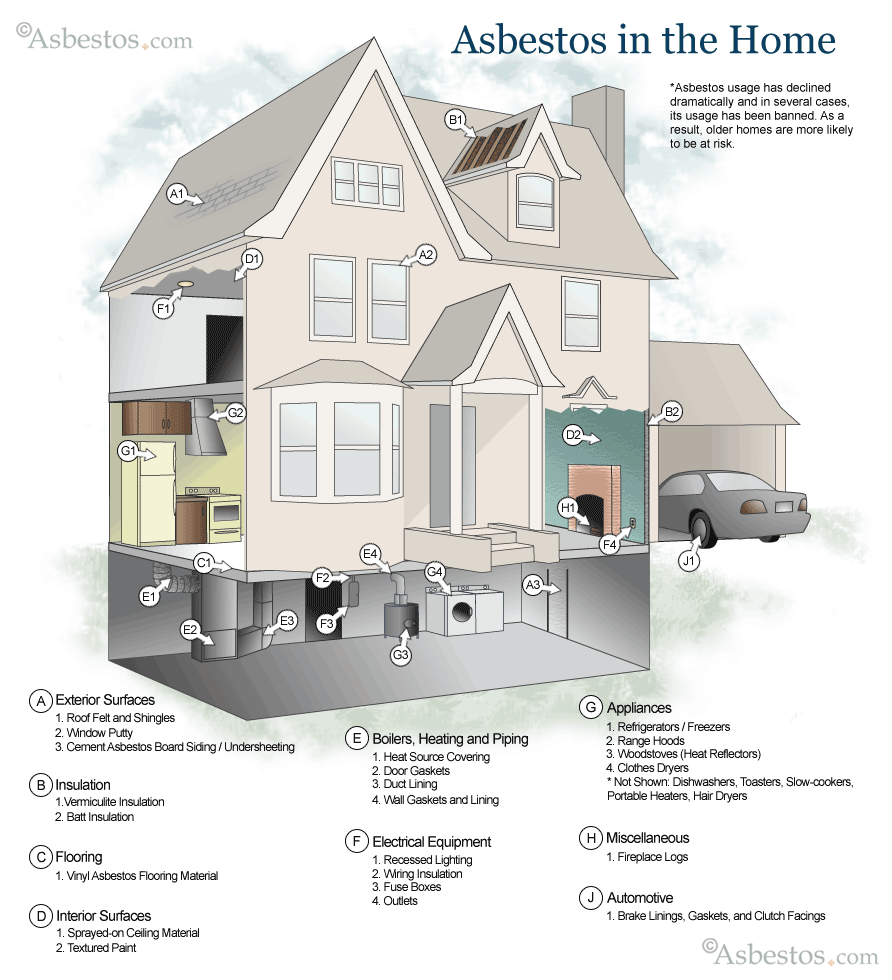
One of the gentlemen at Asbestos.com sent me this article in hopes of educating people on the dangers of in-home asbestos.
One thing I found out last night, doing other research is that asbestos is in asphalt shingles as well.

The path to owning a home is an exciting time that will bring many rewards for you and your family. It will also require additional responsibilities. Used throughout the 20th century, asbestos became one of most sought after building applications in the world. The state of New York contains three naturally occurring locations of asbestos.

According to the Agency for Toxic Substances and Disease Registry, about 400 public facilities, job sites and oil refineries are still known to have asbestos exposure issues. These cities include Brooklyn, Bronx, Long Island, Manhattan, Albany, Rochester, Staten Island and others.

Potential New York home buyers and those remodeling older homes should know that asbestos exposure is easily preventable by taking simple precautions. Many healthy, green alternatives now exist that make the use of older construction materials obsolete.

Homes and buildings built prior to 1980 still may contain asbestos-containing materials. Although not all asbestos can be toxic, damaged asbestos fibers can be released into the air, which can lead to the development of rare, but severe health ailments such as asbestosis and mesothelioma. Mesothelioma treatment is limited to a handful of options, but new diagnostic procedures are being tested specifically for detecting diseases such as mesothelioma. The amount of asbestos-related incidents in the last century has lead to mesothelioma lawyers advocating and protecting victims’ rights. The asbestos and corporate industries were aware of the health hazards involved with asbestos, but continued the widespread manufacturing of the substance anyways. Millions of people have been wrongfully exposed for financial gain.

If any asbestos is suspected, the best advice is to leave it un-disturbed. Touching or breaking it off may cause it to become damaged and release its fibers into the air. Sometimes the best action is no action. , a home inspector can determine the proper course of action. If asbestos removal is necessary, it must be performed by a licensed abatement contractor who is trained in handling hazardous materials. The New York Division of Safety and Health oversees the abatement of toxic hazards such as asbestos during remodeling, reconstruction or demolition. They enforce state and federal laws regarding the safe disposal and removal of asbestos.

Many cities and states are implementing green strategies to reduce carbon footprints, save energy and maintain healthy homes. Many eco friendly alternatives exist that replace the need for asbestos. These include cotton fiber, lcynene foam and cellulose. Not only do these healthy substitutes provide the same qualities as asbestos, they can even reduce annual energy costs.
Conducting a study in 2003, the United States Green Building Council reported a savings of $50 to $65 for green constructed buildings. A water based spray polyurethane foam, lcynene is becoming a favorite for healthy insulation, containing no toxic components. These options allow for a safe, environmentally sustainable home, free of any health corroding materials.

Please look at this diagram closely - click on it to enlarge in a separate window. It will help you identifity where there are possible asbestos issues within your home. Understand that asbestos that is NOT disturbed will not harm you. It's only when it is dust or particulate form that it is so dangerous.

Labels: , , , ,

Saturday, January 24, 2009

Windows, The Weak Link


In the history of man, it's been only a little more than a millenia that we've had the luxury of seeing out of our shelter without the frigid blast of winter or furnace wave of summer filling the abode.

But the technology of glass, or other transparent building material has come to a virtual stand still. Yes, there are single, double and even triple pane windows - with or without inert gas or films applied. But with all of these minimal changes made to the making and use of glass, it is still the weak link in keeping a house heated and cooled.

And yet, we have increased its use substantially. 20 years ago, the general rule was for window space to be 10 % of your floor space. So if you had a 1000 sf home, you would require 100 sf of window space. That number has jumped to 15% - 18% and many homes approach a phenominal 30%. The problem is, with every 3% increase in window space, a 2% reduction in heating and cooling efficiency is realized.

How Weak

Beyond that, walls account for 30% of all heat loss from a home, but are easily 3 times the surface area of windows. Windows account for 20% of all heat loss - using 1/3 the space of the walls, they accomplish a heat transfer at least 60% more efficient than the walls. This is an efficiency we can ill afford.

Another way to look at this idea is that walls are now insulated to at least an R-20. Windows, on their own, max out at R-4.5. This is with the most expensive and most efficient windows on the market today. Hardly what the majority of homes have.

There are several things you can do to improve the R-value (there's a thing called the U-value, but I'm not going to confuse this discussion even more) of your windows. Curtains and drapes aren't really helping you. Unless they are an actual window cover that fits tightly within the window's woodwork, they are little more than - oh - window dressing!

I'll try to organize the suggestions in an order that is from least to most extreme, with many of them being equal.

Metal Windows

Metal windows are by far, the most inefficient beast man has made. The metal frame is the most effective "cold bridge", even over cold air itself. It conducts heat and cold (don't fight with me physics folks, I know) so efficiently, that it's a wonder anyone considered metal frames a great idea.

You must make a barrier for these windows both inside the wall and inside the living space. Inside the wall, place rigid foam or expanding spray foam so it is covering the entire metal frame - or the wood that surrounds it, so that it doesn't touch any other aspect of the wall - drywall or wood. This will block it from conducting heat or cold to the surrounding wall space. Outside the wall, but within the living space, make a plexi or rigid plastic "storm window" with a rubber or foam gasket that will cover the entire window space, and the gasket covering the entire outer edge of the metal frame. This will accomplish the much needed air space and block the metal from conducting the cold to the interior of the room

All Other Windows

Air Spaces

The more air spaces you have, the more insulating ability you have. This includes windows, blinds and drapes. You can add a storm windows or shutters (that are more than decoration) to the outside of the home. You can add a plastic film, blinds, shutters, shades, drapes and rigid foam inserts to the inside. They all must make direct contact with the window frame to be of any use, but with that simple rule, you can achieve a great deal with any, or all of these ideas.

Blinds

All types of blinds are very effective at creating an airspace between the living area and the window. But again, they must be a good fit, which often means the must be custom made. Metal blinds aren't effective, due to the conductivity of heat and cold, but they have long since gone out of style, and are most likely not made anymore. So no worries.

Shades

Some shades are good, if made of a tight-weave fabric or of segmented wood. The types made out of sea grass or reeds are too loosely woven to be effective at making that air space.

Drapes

Again, these must be made of a tight weave, or have a liner made of a tight weave and must make a solid connection to the wood frame surround all 4 sides of the window. If not, the air is free to move. With the air cooling between the drape and the window, a strong current is established, making a very effective air conditioner during a season you least want it.

Insulated drapes are another step within using drapes. You can purchase these in stores or catalogs or you can make them yourself. The more layers within each drape - again for the highest number of air spaces - the better they will work for you.

Shutters

Interior and exterior shutters will work virtually the same, except exterior can protect the glass during a storm, and bring partial or full shade to the glassed area, cutting down on the green house effect during the summer. For heating purposes, they must be create a tight bond covering the glass space.

Rigid Foam

These can be made of any thickness rigid foam insulation you find at the home improvement store. It should be cut to size for each window, so that it fits snuggly within the window frame. It would be put in palce and removed just as curtains are drawn or opened on a daily basis.

This suggestion is the most extreme and I would only recommend this for the coldest of homes or buildings that have many rooms unused for much of the week. It's laborious and these fillers take up a significant amount of space and need to be stored during the day or pleasant weather. Again, for the buildings with many unused rooms, these are also appropriate during the summer, to keep heat OUT.

Radiant Barriers

Radiant barriers can be used individually or incorporated into any of the above suggestions. The material can be styled like mylar, can be a bubble-style insulation with the radiant barrier on one or both sides, or can be similar to material, with nylon strands incorporated within it. You can find these materials online or in home improvement stores. Since it works like it says, it will radiate (or reflect) the heat back to wherever it came from. This can be outside during the summer, or inside during the winter. When used in walls, it has a 97% reflectivity rating, making it incredibly effective in maintaining the temperature in a house. Which means, it can be similarly effective with your windows!
Storm Windows
Most of us already have storm windows on our homes, if not the ever-coveted replacement windows. But if not, seriously consider them. They are a cheaper alternative to replacement windows and most likely will do more good since the air space is larger.
Savings
And while it truly depends on which of these suggestions, or even which combination of suggestions you choose to use in your home as to how much heat you save. Count on it being at least 5%, which is often enough to pay for any of these suggestions within 2 years.
Note
Note that I did not suggest replacing your windows. Unless they are metal framed or the rope-sashed windows, it's difficult to advocate replacing them. Adding storm windows, if done properly, is as effective, due to the larger air space between window panes. Many people are unable to afford replacement windows, and so feel they have no options to save money. But they do. And if you have been able to replace your windows, you still have much to do to make those windows as efficient as they should be. They are not stopping the heat from escaping from your house. They're just slowing it down a little bit compared to your old windows.

Labels: , , ,

Sunday, December 28, 2008

Utility Bill Savings

Since I moved back to my parents' house in 2001, I've been doing what I can to make the house more energy efficient. All 3 of us are on very limited incomes now and so must conserve the collective monies in any way possible.

One problem being, they are elderly and are getting cold at warmer temperatures. This means each year, the average indoor temperature goes up about a degree. And with Mom's heart/lung issues, she needs AC in the summer for air quality as much as temperature. So AC is turned on at cooler outdoor temps.

Conserving with parameters like these is a challenge! However, with a 140 y.o. house, it's not as bad as it could be. I'm getting close to maxing out on improvements, but I have about another year of major work before I'm struggling to find ways to bring the numbers down.

My natural gas (NG) and electric (E) numbers go back to 2004. Unfortunately, I've not found the bills for prior to 2004, although I'm certain my mom has kept them somewhere. It's just a matter of finding them.

2004 we added a new roof, which meant some more attic insulation, peak vents, better underlayment - the new roof is in the picture above...
So, 2004 numbers
NG total 1606 btu's
E total 12,595 kwh's
CO2 in Metric Tons - 13.07

WOW - are those horrid numbers or WHAT? Perspective - it's about 1000 sf.

In 2005, we resided it. Sorry - vinyl. We couldn't afford anything different. I believe we also got the new gas stove and furnace, which the numbers reflect...
The numbers for 2005
NG - 1127
E - 11309
CO2 - 10.37
Late in 2005, so the numbers are reflected more in 2006, we insulated an unheated space of the house, the cellarway. It went from hideous to fab (by comparison) in a month. Life can be that good sometimes!
We weren't able to add a lot of insulation, but a new window was put in, a new door, a new storm door, drywall and caulking continues as I find new cracks to fill.

This, along with the addition of CFLs to most of our lighting, was all we could do for the house. I turned my attention to landscaping for 2006.
Some of the improvements helped with the heating and cooling of the house, but mostly beautification and reducing the amount of lawn to be mowed.
2006 numbers
NG 1268 (up, but winter was brutal)
E 9377 (down!)
CO2 - 10.42

2007 turned into the year life was put on hold. Mom had her heart attack April 1, and is still undergoing stent placement 18 months later. I did little more than trying to keep the house running since she was fully unable, I'm barely able and Dad is oblivious/unable. LOL I did get some more of the attic insulated with radiant barrier, but that was it.
2007 Numbers
NG 1315
E 9832
CO2 - 10.85
More heating and more AC due to the illness.
And finally 2008 rolled around. It's been the year of weather extremes. Hot, dry, cold, snow. And that was just April. But truly, we had many more days to AC and to heat than the previous 2 years, so I was certain we'd be headed for trouble.
However, we were able to remodel Dad's bedroom, which meant ripping out the lath and plaster, insulating fully and making it look like something other than a 140 y.o. attic space.


Yes, those are plank walls.
With the added insulation all the way around, his room accounts for almost 25% of the roofline. A mighty big chunk to be insulating. And WOW did it help during the summer! The upstairs stayed cooler when I added the reflective barrier stuff to crawl spaces - by almost 10 degrees. This decreased it another 15. So rather than being 100 on an 80 degree day, it was 80 at 4 in the afternoon on an 85 degree day.
The house needed to stay as cool as before, but the AC didn't run half as much because of the house staying cooler all by itself.
This winter, I have better wood to use in the woodstove, which is poorly placed to be heating the entire house (and so doesn't). The pieces are smaller, which makes it far easier for me to control the heat output. And, I've finally installed those programmable thermostats I bought a year ago. Both factors keep Dad from playing with the heat as much - at all really.
I also purchased a spin dryer. I know solar dryers are the best, but with all of the disabilities in the house, the electric dryer is really necessary. So, by spin drying, I can remove up to 2 quarts of water from the clothes before they hit the dryer. All for 300 watts. Drying time is halved, saving us a ton in electricity.
2008 Numbers
NG 1204
E 8079
CO2 - 9.59 - WOOO below 10!
A decrease of 8% year to year for NG and 18% for E. WOW
Natural Gas Numbers
2004 - 1606
2005 - 1127
2006 - 1268
2007 - 1315
2008 - 1204
Electric Numbers
2004 - 12595
2005 - 11309
2006 - 9377
2007 - 9832
2008 - 8079
The amount of money saved for this year alone, from 2004's numbers to 2008's numbers is nearly 1G. Amazingly, electric is within 1 penny of the 2004 cost. So, even though that's seen such a dramatic decrease in use, it's not as dramatic for cost savings as the NG. But, any savings is more than worth it to me!
I also know they were paying more per month for their utilities in 2001 than I am paying now, so there has been at least a halving of the amount used over the last 7 years.
The savings are being put back into the house - we'll be redoing my room next. It's on the NW side of the house, no insulation, storm windows that don't really work, and receives the full brunt of winter wind - even with the landscaping I've done.
It should be interesting to see what savings we accrue this coming year. It makes me very excited!

Labels: , , , ,

Tuesday, September 16, 2008

At Least 10 Uses for Bubble Wrap

One of mine -
Place on windows you don't look out of often. Tape in place. Ditto for doors.
Directions For a Greenhouse or Windows
Directions and Formulas For Savings

All From Bubblewrap Shop.
http://www.bubblewrap-shop.com/3.html

Prevent toilet-tank condensation
If your toilet tank sweats in warm, humid weather, bubble pack could be just the right antiperspirant. Lining the inside of the tank with bubble pack will keep the outside of the tank from getting cold and causing condensation when it comes in contact with warm, moist air. To line the tank, shut off the supply valve under the tank and flush to drain the tank. Then wipe the inside walls clean and dry. Use silicone sealant to glue appropriate-sized pieces of bubble pack to the major flat surfaces.

Protect patio plants
Keep your outdoor container plants warm and protected from winter frost damage. Wrap each container with bubble pack and use duct tape or string to hold the wrap in place. Make sure the wrap extends a couple of inches above the lip of the container. The added insulation will keep the soil warm all winter long.

Keep cola cold
Wrap soft-drink cans with bubble pack to keep beverages refreshingly cold on hot summer days. Do the same for packages of frozen or chilled picnic foods. Wrap ice cream just before you leave for the picnic to help keep it firm en route.

Protect produce in the fridge
Line your refrigerator's crisper drawer with bubble pack to prevent bruises to fruit and other produce. Cleanup will be easier, too -- when the lining gets dirty, just throw it out and replace it with fresh bubble pack.

Make a bedtime buffer
Keep cold air from creeping into your bed on a chilly night by placing a large sheet of bubble pack between your bedspread or quilt and your top sheet. You'll be surprised at how effective it is in keeping warm air in and cold air out.

Cushion your work surface
When repairing delicate glass or china, cover the work surface with bubble pack to help prevent breakage.

Protect tools
Reduce wear and tear on your good-quality tools and extend their lives. Line your toolbox with bubble pack. Use duct tape to hold it in place.

Sleep on air while camping
Get a better night's sleep on your next camping trip: Carry a 6-foot (2-meter) roll of wide bubble pack to use as a mat under your sleeping bag. No sleeping bag? Just fold a 12-foot-long (3.6-meter-long) piece of wide bubble pack in half, bubble side out, and duct-tape the edges. Then slip in and enjoy a restful night in your makeshift padded slumber bag.

Cushion bleachers and benches
Take some bubble pack out to the ballgame with you to soften those hard stadium seats or benches. Or stretch a length along a picnic bench for more comfy dining.

Labels: , ,

Wednesday, October 24, 2007

At least 10 Uses For Old Clothes

10/24 Just found this after a small ditty in a newspaper article...
Denim Insulation!
Bonded Logic:
http://www.bondedlogic.com/
They use Denim from textile factories and remake it into regular bat insulation! WOW. I would have used it in my latest construction project. Will next year in my upstairs renovations.

From Thrifty Fun.com
Welding Gauntlets From Jeans
I use the legs from an old pair of denim pants for welding gauntlets to cover my arms while welding. After cutting the legs off the pants, sew some elastic banding on both ends. that holds the gauntlet in place at the wrist and at the upper arm.
This protects the arms from welding splatter, and UV rays while welding. (Note - these are used in conjunction with welding gloves - OR the welding gloves can be sewn to the lower portion of your gauntlet instead of installing elastic there.)
Rex Smith

T-shirt Quilts (I have several patterns that people can use as ideas, if they're so inclined. Email me at onedndylyon @ aol.com for pictures. Leslie)
There is a pattern for making quilts out of tee shirts that have a special meaning. Maybe for the Sports enthusiast in the family for graduation. A tee shirt quilt made from all their sports teams shirts.
Donna

Weaving Pot holders
You can cut the sleeves from t-shirts into rings and use the rings instead of purchased loops for weaving pot holders. Great colors! You can also do this with the tops of worn socks.
jlxian

Denim Quilt
I have also made a Quilt out of my Hubby's old jeans! He never throws away a thing "it'll make a good rag someday" so when the pile became overwhelming I cut up the legs, stitched together with batting and a sheet and had a heavy warm quilt!
I also have made Pillows out of old, beloved Shirts from my kids. They work real well as throw pillows on their beds. Just stitch up the openings and stuff! too simple and they love them!
Terry R

T-shirt Pillows and Jeans Bags
I've made pillows out of old tees, they are so warm and comfy. Also, cut diagonally down the shirt from the collar to the bottom hem and sew for a simple dress up skirt, an adult tee shirt makes a child's size. Another fun thing is to make bags from old jeans and pants cut off the legs where they meet hem the remaining piece at the bottom and tie hobby rope to the belt loops of sew on straps from the jean leg. You can also make small bags from the bottom of the pant leg. Just cut about 20 cm from bottom of one leg, and hem the raw edges together, you can add handles also.
Hope you can use some of those ideas! E

From Associated Content.com
Draft Blockers
For those of us who live in old houses or apartment buildings, rattling windows can mean winter drafts. Old t-shirts rolled into tubes can help block some of the cold, drafty air in the crevices.

Wall Art
Let’s say you like the design on the front (or back) of your t-shirt - but it no longer fits you. Or maybe there’s a stain or hole elsewhere on the tee? If the design is nifty enough to be decorative, you can frame it. I actually stole this idea from department stores that display their t-shirt stock in perfect squares, folded and pinned around a piece of wood or plastic. Just wrap the t-shirt around the “backboard” of a poster frame, and stretch it to eliminate wrinkles. It should work with or without glass.

Tool Box Towel If you keep a tool box, large or small, it’s possible that you occasionally handle greasy or oily tools. You can use an old t-shirt instead of wasting paper towels or buying a package of rags.

Drawer Sachets
As a fabric, cotton does breathe. So you can trim pieces of an old tee into squares, sprinkle a little lavender or potpourri inside, and tie it up the bundles with string. As long as you don’t pick anything too potent, these cheap sachets are a nice way to keep your clothing smelling fresh inside dresser drawers.

The Sauce Shirt
Every time I cook pasta, it seems like I get some sauce on my shirt during the preparation process. Instead of wearing an apron (I hate aprons), I keep one t-shirt that I use for messy cooking enterprises. Then, I don’t have to worry about fussily using a stain-stick on my “good” clothes

From Frugal.Families.com
Denim
I could make a custom journal for myself or as a gift by covering a composition notebook with the jean fabric. One of the pockets could go on the front as a cute way to hold a pen.
I could use the jean material for a rag rug. Earlier, I wrote about doing this with t-shirts. Although the materials are different weights, they might go nicely together for a sort of americana, blue-jeans and apple pie sort of look.
I could sew up a cute denim purse for my niece. I could cut off the legs and sew up the bottom part above the tear, and then add a shoulder strap or little handle from some of the leg material.
I could make an apron by cutting the legs, opening up the fabric and putting a fabric belt through the belt loops.
The legs could be knotted and used for doggie pull toys for my friend's dog.

T-shirts
Dusting and polishing cloths: This one may be a little obvious for the truly frugal, but sometimes we can forget the obvious. The soft t-shirt material is wonderful for dusting and polishing. Just the other day, I saw Martha on TV polishing silver. She was using expensive cotton cloths to get up all of that yucky tarnish. Why? It would probably have been less expensive to buy brand new t-shirts and cut them up, let alone use old ones.

Old Towels
Repair: Simply sew a running stitch above the unraveling edge. Then turn that uneven edge into a nice fringe. Tada--new towels. Since I am unskilled in sewing, I asked a good friend to use her machine and sew the new hem for me. She even went ahead and did a pretty zigzag stitch in a contrasting color.

Washcloths: Cut the towels into squares, round the edges and sew around for brand new washcloths. This works especially well when there is a hole in the towel that you can cut around.

Diaper Wipes: This is one of my favorite things to do with old towels, probably because I have two little ones in diapers at the moment. I cut the towels up into squares and use them as homemade diaper wipes. No sewing needed. I simply wet them with a little water and go. I wouldn't recommend this for big messes, but for wet diaper changes or for an infant, the homemade diaper clothes work just fine.

Cleaning cloths: For cleaning clothes, you can cut the towels into whatever size works best for you (I like small dish towel size). Again, there is no sewing needed, although you could put a hem around them to make them last longer. I use these homemade cleaning cloths in my kitchen, in place of paper towels for everything from drying an apple to wiping down the kitchen counters and the sink.

Dusting cloths: soft, well-worn towels are perfect for dusting cloths. They seems to grab dust with ease and absorb just the right amount of furniture polish. No sewing needed on these. If they unravel too much, simply cut of the edges as needed.
Beach towels: Sew together two or three to make great beach towels. You can trim any ratty edges and still have enough material to wrap around a wet child or use on the hot sand.

Old Clothes in General
Reconstructing old wool coats into new coats for children, sofa pillows or even cloth handbags and clutches.
Old dresses usually have enough fabric to make a new dress for a child or a Halloween costume.
Cotton dresses can also be used to sew a small set of curtains for a bathroom or back door.

Sew the scraps into small squares and stuff with dried beans for bean bags. Or, turn the scraps into fabric Christmas ornaments, contrast collars for children's shirts, hair bands, or a cloth belt.

Men's plaid shirts can find new life as cotton handkerchiefs.
Save several plaid shirts to create a set of coordinated table napkins.
Men's cotton shirts make wonderful plush toys, lampshade covers, and summer quilts.
Cut with pinking shears, they also make terrific toppers for home canned jams.
Heavy wool fabric can be cut into strips, and turned into braided rag rugs. I have a circa 1890 braided rug that was made out of old civil war uniforms, which has outlasted every other rug I have ever owned.
Turn mismatched socks in sock monkeys and sock puppets.
When the fabric has been used every possible way you can imagine, it's time to turn them into animal bedding or rags. Shredded fabric works well for hamster and rat cages.
Old, worn out coats make great dog blankets.
Strips of old fabric can be used to tie climbing vines onto trellises or for staking your vegetable plants.
Threadbare cotton squares are terrific for straining jellies.

Labels: , , , , ,

Wednesday, August 29, 2007

Why You Insulate

A picture before anything was done.
Spring day, sunny, but the air and soil aren't over 75. Inside temperature with the doors open - 115 at 6' high.


During insulation process. Walls got about R20, with reflective barrior as well. Ceiling is at about R30, with reflective barrier. Soffit vents, peak vents (pre-existing).


And after - much darker stain. Windows to let sunlight in for a greenhouse effect. Temperature today, 90, sunny. Open door. Temperature in 94 at 6' high.


To repeat - before, 75 and sunny with doors open - 115 at 6' high. After, 90 and sunny, doors open - 94 at 6' high.

This is why you insulate.


Insulation also prevents the depletion of our natural resources. Today's fiber glass insulation contains more than 25% recycled glass and uses renewable resources such as sand. In fact, according to the Glass Packaging Institute, Fiber glass insulation is the largest secondary market for recycled glass containers.

http://www.naima.org/icf/
http://www.naima.org/pages/benefits/environ/environ.html
http://www.naima.org/pages/benefits/environ/recycled.html - why isn't slag used more?

Reflective insulation in fl construction
http://fifoil.com/pdf/Insulation_Study_%2001.07.pdf - more about reflective barriers

Labels: , , ,