The Spiraling Homestead

Tuesday, January 20, 2009

Seal Those Drafts

In the humidifier post, we discussed how a house with dry air is a drafty house. But not all drafts are from dry air. If your house is 20+ years old, chances are it's drafty. And if it's 60+ years old, it's down right breezy. Our house is 140 years old. You can imagine. A book - Renovating Old Houses by George Nash - states that most older houses have enough gaps for cold air to infiltrate equal to leaving your front door open 24 hours a day. When you really only need about a half an air exchange an hour, does it make sense to knowingly allow this much COLD air come waltzing through your home?

Fortunately, there are things you can do to alleviate many of the drafts - and all from the warmth of inside the house

Here in upstate NY, we just experienced the coldest air mass in the last 5 years. My guess is, you felt drafts that you had no clue existed. I know I'm finding them. So - ditch the sweater. You'll be getting warm doing this work

Basically, what you'll be doing is going around the house feeling for drafts. Everything is suspect - outlets, switches, doors, windows, pipes and the foundation are all bound to have a stream or river of cold air falling from them

Materials

I tend to keep things really simple for my sake. Depending on how indepth you decide to get with this project (s), you'll need most of these.
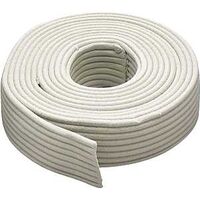
Hammer
Flat head screw driver
Calk - silicone clear
rope calk
Foam outlet and switch seals


Windows

Do you still have the old sashed windows? You know, the ones with the ropes and weights inside the woodword. We still have 6. Fortunately, only 3 are really vulnerable to the brutal NW wind, but that doesn't mean the others aren't leaking. (Here) is a video and written instructions on how to insulate these. It works! I've tried it.

If you have newer windows, they still probably leak some. You can feel around the woodwork, or use a stick of burning incense to find the leaks. Chances are, if there is open space between the woodwork and the wall, you'll see the smoke plummet toward the floor. If the smoke does anything more than waft along you have a leak. This means you have to get the calk out.

I prefer clear silicone calk. It blends in well, is paintable and remains flexible for years. But if you have a type you prefer, please use that instead. When you do begin caulking, PUSH the tube. Pulling it stretches it and doesn't get it worked into the crack. By pushing the tube, you get it worked into the crack and a far better looking bead. I wasn't a believer, but have become one since having to do a lot of calking

Repeat this process with all of your windows, not just the ones facing North or NW. It's just as cold on the South side of your house as it is the North. The air will still leak in, even if it isn't forced by the wind

Switches and Outlets

Now that you've finished the windows, it's time to relight the incense and check all of your outlets and switches. Since there should be at least 1 switch per room and an outlet about every 6', there will be plenty of checking to do. Check interior walls as well as exterior. You'd be surprised at how cool that air can be as well.

Remove all of the plates and take your incense around. Chances are you will be appalled by the amount of air moving through these tiny spaces.

Use your calk (it's non-conductive) around the outside of the boxes. Never put anything inside the box itself. It's dangerous and against codes. Most drywall is not 100% snug around the boxes, so you need to seal that space. If you think there's enough room, place some fiberglass insulation around it first, and then seal the gap.

Next, take a foam seal you bought in a packet of at least a dozen for about $2 and place it around the outlet. Then, replace the wall plate, covering all of your work.

Repeat this procedure for all outlets and switches. It's time consuming, but so worth it! This alone can save you at least 2% on your heating and cooling bills, not to mention the comfort of your home improving massively.

Doors

I hate doors. Our entire house isn't square, and moves with the seasons, so the doors are almost impossible to keep sealed well. But that doesn't stop me from trying!
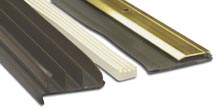
Check the weather stripping. If it's not pliable, or is cracked, you should replace it. Thankfully, this is inexpensive and easy to do. Replacement kits exist in every home-improvement store. If I can do this in less than an hour, it's easy.

Once you've checked your weather stripping, check the woodwork around your door. Often, it is like the windows, and not sealed properly. Use your calk to seal any leaks surrounding the woodwork.

And if your house IS like mine and the doors aren't set squarely, you may be able to solve some of this issue with shims behind the hinges, or even replacing the hingest themselves. I've done both to 2 different doors with great success. Both doors seal far better and work better. They latch well year 'round.

Foundation

Anytime there is a change in materials, you have the chance at air leakage. And so it goes with your foundation. This is where blocks or cement meet wood. If you are able to get to this portion of your house, you can use the expanding foam in the spaces. You can also use calk, if the leaks are small. The foam is nice for it adds R-value, and expands to fill larger spaces, or spaces you can fully reach with the calk gun.


As long as you are in your basement/cellar, look at your window and door casings here as well. Even if it is unfinished as a living space, you will still be affected by its temperature. You don't want or need cold air under your living space. Cold floors are uncomfortable.

Once you've finished with the windows and doors of your basement, look up. You have pipes and ducts going through the subflooring into your living space. Again, like the outlet boxes, it's rare for these to be sealed well, allowing air to travel along them into your living space. Depending on the size of the spaces, use calk or the spray foam to fill the gaps.

Roof

The one area of your house you WANT air flow is your roof. Keep soffit vents, peak vents and ridge vents open. Your roof needs to breath to keep from rotting. This doesn't mean it shouldn't be insulated, but the airflow is critical to the health of the roof and the house.

Finished!

Now that you've finished this work, you have now saved a full 5% on your heat bill and maybe more, depending on your leaks. Your home is far more comfortable and for little effort or money. That, to me, is the most satisfying! The last 2 days had me calking leaks that equalled nearly 1 square foot. The two rooms I worked in are now 3 degrees warmer. THAT is what this post is about.

Labels: , , , ,

Thursday, December 20, 2007

Updates From Leslie

If folks haven't noticed, I try to keep my blogs (I have several, but this is the only active one at the moment) more like an information site. I try to site my sources. I try to maintain a professional tone. I try not to let myself become an Op Ed writer, but it will and does come out if I'm outraged enough. Mostly, I try to offer solutions, rather than just cry and bemoan all of the problems in the world.

12/20 - I'm seriously considering starting a series called "save the world". So many things, so little effort!
Save the world - stop taking Prilosec! (or other H2 inhibitor)
That sort of thing.
comments? Ideas? Bring 'em on!
12/15
I don't think I can take much more holiday cheer. LOL With a storm barreling toward us, I shampooed the livingroom carpet. Seemed like the thing to do. By shampooing it, it lasts longer, staying out of the landfill longer, and I transfer yet more of the bad chemicals from inside my home to the sewage treatment plant, and thus the river. Such is life.

My absence here means my efforts were turned yet again toward Katrina Survivors. It's been 2 1/2 years and still hardship, turmoil, disaster remains. I have several sites established to assist both individuals and agencies during the recovery efforts, which are supposed to be finished in another 8 years.

Since Thanksgiving, I have sent down (with the help of several family members and friends), 21 boxes of Christmas to families who have slipped through the cracks/chasms of organized relief efforts. 1 has a son who was lost 22 days after the storm, still suffering from severe PTSD. His psych bills keep them below poverty levels. Another has a daughter dying in need of a kidney transplant, due to some unknown viral infection afflicting others in the region. Yet another was shafted by a roofer, only to find out in recent rains all of their rebuilding efforts were ruined by a bad roof. Each is heartbreaking. But each is inspiring as well. They've made it so far on so little and ask only that their children have Christmas for the first time since The Storm.

So - I help as I am able.

This year was far less than last. I wasn't able to get out and hang posters. My vertigo just too substantial. Most churches ignore the plea for assisting one family, even with my promise of postage. I've not heard back from a single church that I mailed letters to in the last week of November. BUT:
family and friends have come through in ways I never thought possible. Our efforst are listed on my main blog - http://www.katrinanetworking.blogspot.com/

The efforts haven't been so green. I've been able to utilize reused items (clothes) to a large extent, have spread magazines (which are in VERY short supply, give something to look forward to every month of the year, increase the childrens grades substantially and are good for the entire family) far and wide to large families. But, because cost of living, the stress of shopping, and travel time being so prohibitive, much was shipped. I was able to buy more and still ship than send gift cards to the families. Sad, but true. So, much petrol was used.

To me, I guess there are just times when green must take a side seat to the emotions of children. I tried to supply few games, NO electronics, simple but needed items to help. Electronics just end up costing the families more, so I won't do that. They can barely pay utility bills. Why add to their burden?

There is still time to help if you want. Yes, I'm pushing! Gift cards can be sent online - so the families get them before Christmas. Groceries for a Christmas dinner would be wonderful! Winn-Dixie, Wal-Mart, Kroger are all quite common. If you would like to help, even at this late time, please email me at KatrinaCoalition@aol.com. I will direct you as best I am able.

So, please accept my apologies for being so delinquent here. I'm dead on my feet for many reasons, with the weather adding to the burden. I will post as soon as I am able.
Leslie

11/11 - Wow - who knew I'd keep up as well as I have so far? Life remains insane.
I just finished the second of 3 curtains for the quilt shed. These are different for a few reasons:
I'm using/reusing upholstery fabric to make them, making them fairly heavy.
Am sewing a solar curtain into each one, between the lining and the actual curtain. They're very crinkly, but I think they'll really help with keeping temps constant in the shed.
I pieced them together so each fabric is a diamond shape. I'll get pictures up soon to explain better.

I ordered another 500 sq' roll of bubble/foil insulation. Now that we've had a real test of the work I've done insulating the house thus far, it's time to do some more. I am completely amazed. I still don't know how much we're saving. Am hoping to know that this bill. But we can keep the heat turned lower and it's both warmer and warmer feeling. Mom's in a T-shirt, I'm in shorts, and Dad has only 1 sweatshirt on. LOL - AND, I've barely used the woodstove.
When I first moved back, I had a hot fire going any time the weather was 40 or lower. Today, it didn't reach 40 until 2PM, and yet no fire. The house is actually heating up with the sun shining.

So, once I finish the solar panel for the quilt shed, I'll be doing 3 major insulating jobs on the house. One in the office - that'll be a bear. Drop ceiling with maybe an R3. Adding the foil will triple the R value plus re-radiate the heat back into the house. Then, get into another crawl space and foil that. And finally get into the mother of the crawl spaces and hopefully spread the fiberglass more equitably as well as foil over the entire roofline. I'll definitely take pictures of that. It's not going to be fun.

But to me, if you have are R6 or more behind current standards and you have the room, it'll more than pay for itself to insulate. I know right now the thinking is R8 or more. But the way prices are now for heating, R6.

I also bought some programmable stats to put in. We have a 2-zone house. But, I want to see what the savings will be with just this much insulation prior to putting the stats in. Just because.

So - let me know what you've done to make your house more efficient.

11/1 It's only been a week! You can tell I'm on vacation. LOL I have time to think AND write.
Here's a theory I may expand at some later date...
Anyone who has studied physiology knows that mammals produce carbon dioxide. The carbon dioxide is actually a byproduct of acid reduction at the cellular level. You breathe it out. But, if you produce too much, your kidneys kick in and you pee it out. They have to because the blood becomes too acidic for anything (like oxygen) to flow through the blood the way it's supposed.
If you think of the world as living organism similar to a human, you start to understand how the earth is coping with the carbon dioxide that is being produced at record levels.
Now, with reports of the oceans being saturated with as much carbon dioxide as they can absorb, levels will begin to rise in the atmosphere.
And with the earth having no where else to "put" this carbon dioxide, we'll either see a new kind of acid rain, where the CO2 comes down with the H2O, or levels continuing to rise in the atmosphere.
And - when someone suffocates - it isn't from lack of oxygen. We use very little of it with every respiration. It's from the acidosis of too much CO2 being breathed in over and over.
So - it's time to turn off all of those combustion engines.
Just like the town that ran out of water in TN and only has enough for 3 hours a day, we need to stop using all CO2 producing products. Combustion engines (cars, mowers, power plants).
We saw a difference in air quality and temperature just by the halting of air traffic after 9/11 - a matter of a few days with just 1 parameter removed. Imagine what we could change if we removed something else every day.

10/24
Wow - didn't know it had been a full month. Woof. Nothing like life to distract!
The building project is complete! Woo - go to http://www.fullcirclequilting.blogspot.com/ for pictures. I still have to finish putting pics up there, but you get the idea...

Our electric consumption has gone way down in the last few months. I'm not quite sure why.
Our AC use has actually gone up for health reasons. And nothing else has really changed. So I am truly befuddled.

The only thing I can think is that we might use the AC more frequently, but for less time per day. I bought some "solar curtains" and put them on all of our south facing windows. I've also added radiant barrier insulation to key areas of the roof line. So rather than turning the AC on at 11 AM, which we did last year (a cooler year), we could wait until 1 PM. and turn it off earlier in the evening, rather than keeping it on until we went to bed.

I've also changed the way laundry is done, but it's been that way for about 7 months now, so I would think I would have seen this drastic of a change far sooner. But, we don't do laundry every Monday, whether they are full loads or not. We wait until there is a full load of darks, a full load of whites, etc. That makes laundry occur 3 days in a row, but no one load has to be run for 8-10 days. And yes, our dryer is electric.

I'm getting ready to buy a new dryer - this one is probably 20 years old. I'm also going to put a shunt on it so that in the winter, we can throw the heat and humidity used and paid for from the dryer into the house. And by doing laundry the way I am now, this will add a nice slug of moisture and heat to an area of the house that is at the end of the furnace's run, being the coolest.

Have also found out that the entire roofline was never insulated. Talk about shock, disappointment and amazement! Crap.

So, right now, about 40% of the roof line is as insulated as I can get it without ripping ceilings out. That's next summer. After my mini vacation next week, I plan on getting another 10-30% insulated, depending on access.

And with heating bills going up 10-50% this winter (depending on how you heat), it's going to be incredibly important to get this insulating done.

Have been building a solar heater for the construction job in the back yard. I'm still not finished with that and keep hoping "tomorrow" is the day I can focus on it. I only have about 1 more day of work and it's complete. Wish me luck!
Leslie

9/24
Well, almost done with our current building project. I am quite tickled with the whole thing.
We bought the building prefab - 12x24. Bought used windows at an auction for $50 ea, will be selling the "left overs" at another auction in a week.
Bought scrap carpeting at another auction, only have to piece a wee bit to make it wall to wall.
Bought the radiant barrier as seconds online for less than half the price of "new" from same company and less than 1/4 at Lowes or HD. Plus, 4X as much in one package as HD or Lowes.
Used up some styrofoam insulation left over from having the house sided.
Am going to use the rest of the fiberglass insulation in odd spots in the house.
Bought used railroad ties on the cheap for around the building and my cousin is using up scrap wood we've had around to finish out the trim around the windows inside.
The electrician is using up left overs from other builds to wire the shed (work shop).
I've recycled and/or reused every bit of 90% of the waste from the project, so that all of our efforts of tricking it out add up to less than 4 1-gallon paint cans of trash.
I have found that drywall is just calcium and magnesium - which, when burned with wood, will pulverize very easily. This makes adding it to the calcium depleted soil of acid-rain saturated NYS far easier than it otherwise would have been. I'm in no hurry, so will merely add it to our wood stove when we burn it this winter.
Am using 1 of the left over windows, cat food cans and scrap wood to make a solar heater for the shed - will lessen any costs we might incur for heating with whatever heat source we decide on.
Am also going to make some "solar shades" out of some weedblock I refuse to use that my dad refuses to take back to the store. 2 windows are southerly enough to gain a good amount of heat from them, to lessen heat costs out there even more.
So - life is good!
Hard work, a little patience and ingenuity make for a very minimal waste stream, for those willing to take 10 minutes to bother.
L

8/25 Just got our utility bill. I'm astounded. We used half the electricity of the same period last year. Last year was, on average, 1 degree warmer, BUT - this year we used AC much more.

First, Mom can no longer tolerate the heat due to her heart attack in March. Dad hasn't been able to tolerate it for a couple of years. So the downstairs window unit was set 2 degrees lower, and both of their rooms have window units and have been used quite a bit.

The only thing different in the way of energy saving measures was the addition of "solar curtains". They're in just about every junk catalog out there - 1 has different sizes, 1 sells them singularly, but all identical in construction. Mylar-type stuff. You can see through them some, but they reflect heat both out and in. So, winter they reflect heat back in, summer, heat back out.

The reflective barrior I put in just one of 3 crawl spaces (haven't gotten to the others yet) was only put in 2 weeks ago, so I doubt highly it had this much impact.

And yes, it was an actual reading, not estimated.

I am totally amazed. Those things cost me $5 each. I have them on only 4 of 17 windows.

http://www.shoppicketfence.com/product.asp?pn=512038
Picket Fence has them in pairs - but only one size.
http://www.carolwrightgifts.com/cwg_v2/cwg_layout_base2.cfm?mid_sec_page=cwg_prod_detail&seq_no=2&min_seq_no=402&SingleItem=29017
Carol Wright Gifts have them singularly and in a multitude of sizes.
I've ordered more for winter. They work to reflect heat BACK into the home in the winter as well as the reflect heat out in the summer.


8/20 I have found different information that I find incredibly interesting - like the amount of energy saved by processing your own vegetables for use over the year.

My family has always done this, coming from a quasi-farming background. I had left this practice behind during my gyspy days - moving every 14 months for about 10 years. Now that I'm back in a less mobile situation, I'm getting back into preserving our own food.

I researched this and found you use at least 2/3 less energy by either growing or buying your own produce locally and processing it yourself. WOW. http://kermitsteam.blogspot.com/2007/08/process-your-own-food.html

I have made 5 batches of jam so far - only 1 more batch to go. My mother and I canned about 1/3 of a bushel of peaches (the rest of the 1/2 bushel were used for pies and jam) yesterday. And today we froze corn.

Get this - $12 for 5 dozen ears. Less than 2 hours to husk, blanch, cut off the cobs and put into containers. Even if cold water and the gas stove cost $5, consider the savings. We got 28 pints (a pint a pound, the world around) out of the deal. Just a smidge over 2 ears per pint. $.61 per pint.

How much does it cost in the stores? How chalky and pasty does it taste? How much true nutrition do you get? It was picked this morning, processed within 3 hours of it being picked, tastes INCREDIBLE (NYS corn is the bomb!), is far more nutritious than anything in the stores (they add stuff to keep it from clumping when frozen) and price - you can't beat the price.

So - read the article. Think about it. Farmer's Markets are stocked to the gills right now. Many stores carry GOOD corn as a lost leader, and you can also do string beans, tomatoes (your own spaghetti sauce!) summer squash, beets, greens and any other veggie you consider a favorite.

And I may be some sort of garden nerd, but it's a lot of fun doing.

Labels: , ,

Thursday, August 30, 2007

Saving Natural Gas in The Home

http://www.waterloo.il.us/BulletinBoard/HowToSaveNaturalGas.pdf
Heating Your Home
Keep your thermostat low. Each extra degree adds about 4% to 5% to your heating bill. When you leave for the day or over the weekend, lower the setting about 5°. For longer absences, lower the thermostat to 55° (but don’t set it lower because your pipes may freeze).
(if you have a boiler type heating unit, it wastes money and gas to lower the temperature for less than 6-8 hours)
Don’t place furniture in front of heating registers.
Open draperies on sunny days to allow sunlight to help heat your home. Close them at night to help keep out the cold.

Hot Water Heater
A water heater setting of "Normal" or "Low" is usually sufficient. (I do not advocate lowering the temperature below 140 degrees. Food industry preaches that bad things live between the temps of 40 and 140 (F). With the new illnesses such as Valley Fever and Non TB bacterium showing up in shower heads, stay safe, 140)
Wash full loads in dishwashers and washing machines.
Repair leaky faucets; constant dripping adds up to gallons of wasted hot water.

Gas Dryer
Dry a full load each time but avoid overloading.
Clean your lint trap before each load to improve dryer efficiency. (Wash the lint trap! I found it really does make a difference) (use those dryer balls you've seen in the catalogs - they cut our drying time down by at least 15% - yes, I tested it!)

From Alliance To Save Energy

http://www.ase.org/content/article/detail/936
Reducing Winter Heating Bills

Consumers can make their heating systems operate better and longer by having an annual professional “tune up” and by cleaning or replacing filters once a month.
Weather stripping and caulking are great ways to cut heating costs by plugging up energy “leaks.”
Properly insulated attics, walls, floors, basements, and ceilings can prevent loss of up to 20 or 30 percent of your home’s energy. Appropriate insulation will not only reduce your heating bills, but also lower your summer cooling bills. (See North American Insulation Manufacturers Association (NAIMA) consumer web site www.simplyinsulate.com ).
Use foam gaskets to seal leaks around light switches and electrical outlets on exterior walls.
In colder climates with a significant heating season, energy-efficient windows retain more heat, permit less air leakage, and provide warmer window surfaces for improved indoor comfort. Ask your supplier for ENERGY STAR certified windows with double panes and low-emissive coatings so you can star gaze in comfort this winter. For specifics to meet your climate and needs, visit www.efficientwindows.org.
Allow the sun to help heat your home by keeping blinds of sun-exposed windows open in the daytime; close them at night for maximum heat retention.
Consider planting evergreen trees on the north side of your home to block winter winds.
If your home is powered by natural gas, make sure that you have a high-efficiency gas furnace, water heater, and cooking equipment.
Replace continuously burning pilot lights with electronic ignitions to save gas in fireplaces, ovens, ranges, and outdoor lighting systems.

(we replaced our 50+ y.o. gas stove that still worked perfectly with a new one - saved 10% just by getting rid of those 3 pilot lights.)
Additional Resources:

View a consumer natural gas video with even more energy- and money-saving tips from Washington Gas, in collaboration with the Alliance to Save Energy.
Free Alliance to Save Energy resources. Obtain a free booklet, Power$mart: The Power Is in Your Hands, and visit the Consumer Web site.
Free Department of Energy resources. Obtain a free booklet, Energy Savers: Tips on Saving Energy and Money at Home, in English or Spanish by calling 1-877-337-3463 or online and view an animated version at www.energysavers.gov.
Free Environmental Protection Agency resources. Obtain a free copy of Guide to Energy-Efficient Cooling and Heating which is available at www.energystar.gov from the heating and cooling product pages or by calling 1-888-STAR-YES (1-888-782-7937). Download the ENERGY STAR Action Guide 5 Steps You Can Take to Reduce Air Pollution. .
Free booklet for New Yorkers: It's Right. . . and Right at Home, a brochure with energy-saving tips. Contact 877.NY-SMART (877.697.6278) or residential@nyserda.org. For more tips, visit www.GetEnergySmart.org, the consumer web site of the New York State Energy Research and Development Authority (NYSERDA).

Labels: , , , ,

Thursday, August 16, 2007

Green Appliance Article in WSJ

Jeanine Van Voorhees wanted to do her part for the environment when she bought a $1,000 energy-saving washing machine. But her clothes came out covered in cat hair and her whites were dingy. She resorted to washing some loads twice.

"I curse that machine every time," says Ms. Van Voorhees, a retired nurse practitioner from North Tonawanda, N.Y.

Amid concerns about energy consumption, Americans are increasingly encouraged to buy energy-efficient appliances. But while some of the latest products can offer significant energy and water savings, they can be double the price -- or have kinks that can result in clothes and dishes needing to be washed twice.

Still, water and energy bills are on the rise in many areas, and appliance-makers are increasing their offerings of low energy-use products. A few months ago, Sears Holdings Corp. unveiled a new line of high-efficient appliances, including the Kenmore Elite Ultra Wash dishwasher that promises to use about half the water of a standard one. General Electric Co. this year rolled out several new energy-efficient refrigerators, such as the Profile French Door Bottom Freezer Refrigerator that uses at least 15% less energy. Companies such as Bosch and Siemens Home Appliances Group and LG Group have stepped up their offerings of front-load washing machines, which have doors in the front and can accommodate bigger loads but save on water.

An efficient refrigerator won't command much of a premium, but energy-saving dishwashers and clothes washers can go for double the price of standard models. According to the NPD Group, a market-research firm in Port Washington, N.Y., the demand for Energy Star products has fallen slightly in the past year. Approximately 52% of all dishwashers, refrigerators and washing machines sold in the 12 months ended in May were Energy Star qualified, compared with 54% in the year-earlier period. Energy Star is the government labeling program for products that meet energy-efficient criteria. Sales of major appliances were $22.4 billion in 2006, flat compared with 2005, according to NPD.

But, environmental advocates point out that the biggest energy sucks aren't washing machines and dishwashers. Many consumers don't realize that an energy-guzzling plasma TV can off-set the energy-savings of kitchen appliances. A conventional TV consumes about 130 watts of power per hour, while a 42-inch plasma consumes more than twice as much, or around 350 watts per hour, according to Tom Reddoch, manager of energy use for the Electric Power Research Institute, a Palo Alto, Calif., nonprofit organization that promotes the adoption of energy-efficient practices. And one of the largest energy-savings measures is replacing light bulbs with compact fluorescent bulbs, which use about 75% less energy than standard bulbs. Still, government and local utilities are stepping up incentives to get consumers to shell out more for energy-efficient appliances in an effort to ease the burden on regional grids and water supplies. Pacific Gas & Electric Co., which serves 15 million people in California, this year raised its rebates to $75 for clothes washers and $50 for dishwashers that meet certain efficiency standards. The federal government offers up a $300 tax credit for those who install energy-efficient air conditioning and heating systems.

But before buyers hit the showroom floor, consumer advocates point out there a few things they should consider. While most energy-saving appliances perform well, some can pose problems. For example, many consumers don't know they need to use high-efficiency soap or half the amount of regular detergent with front-loading clothes-washers. These can use as much as 70% less water than top-loaders, but regular detergent creates extra suds in this type of washer, and is tougher to rinse. Also, the machine senses the suds and uses extra water, offsetting savings.

Also, some people who bought front-loaders have complained of drainage problems that cause mold build-up around the edge of the opening and a foul smell. Several years ago, owners of a Maytag front-loader, the Neptune, filed a lawsuit due to issues with the machines, including mold growth and door latch problems. The company settled the suit in 2005 and agreed to cover repair and replacement costs, according Jonathan Shub, a lead counsel on the case.

Whirlpool Corp., which now owns Maytag, and Sears said mold build-up in front-loaders is minor, and urge consumers to take preventive steps, such as cleaning the drum and door seal periodically or leaving the door open when the washer isn't in use.

Front-load machines use less water because they cycle the clothes through water at the bottom, whereas top-load machines fill the entire drum with water. Front-loaders also save energy because they dry clothes better in the spin cycle, so clothes need less time in the dryer.

It isn't just some water-saving front-loaders that have problems. Researchers at Consumer Reports recently found that some traditional, top-loader washers, including the Sears Kenmore 2783[1], the Whirlpool WTW5840S[W], and the Frigidaire Gallery GLWS1339E[C], fail to get clothes clean in the wake of new, government-mandated energy-saving standards for all washers that went into affect in January.

"Consumers can't take it for granted any more that any old washing machine will clean their clothes," says Mark Connelly, senior director of appliance testing for Consumer Reports.

Whirlpool and Sears said the washers were tested on a regular wash cycle, when they should have been run on a heavy-duty cycle. Officials for AB Electrolux's Frigidaire said no one at the company was available to comment.

The Department of Energy says complaints about front-load and low-water washers are limited and said the issues seem to be model-specific rather than a problem with the energy-saving technology.

Water-saving dishwashers, too, can have drawbacks. Energy-efficient dishwashers often don't use hot air to dry the dishes, though they may have a "heat-dry" option. No heat can make the cycle longer or leave glasses spotty, say consumer advocates and retailers. Appliance experts suggest adding a rinse agent, such as Jet Dry, which prevents water from beading and causing marks. This, however, adds another step and additional chemicals to the process.

Owners also shouldn't rinse their dishes before putting them in a water-efficient dishwasher. That is because most of the new products are equipped to handle bits of food and rinsing dishes beforehand can negate the water-savings. But some stubborn foods, like eggs or oatmeal, can still get stuck on dishes. Some of latest dishwasher models, like Sears's Ultra Wash, aim to address that problem by using better water coverage and putting in more finely-tuned sensors to determine dishes' dirtiness and adjust water flow accordingly.

Energy-efficient builders and energy-saving advocates advise that if people want to upgrade to energy efficient appliances, they should focus first on refrigerators, because unlike a dishwasher or clothes washer, they run all the time. Air conditioning units, too, tend to be big energy hogs. Cooling accounts for 11% of total energy use in the average home, and refrigerators and freezers account for 8%, according to government data compiled by the American Council for an Energy-Efficient Economy, a nonprofit group in Washington, D.C. The energy used doing laundry and dishes combined accounts for just 5%, according to the council. However, in areas where water is a big cost, a water-saving washer or dishwasher may be a preferable investment.

Write to Sara Schaefer Muñoz at sara.schaefer@wsj.com

(within the article:)
Be smart about your home. Consumer Reports offers some advice on these appliances.
Washing Machines
Vacuums
Refrigerators
Ranges
Cordless Phones
Microwaves
Freezers
Dryers
Dishwashers
Air Conditioners

Labels: , , ,

Thursday, June 14, 2007

Energy Star Info For Congregations

http://energystar.gov/index.cfm?c=small_business.sb_congregations

Exerpts
What You Get
Free, accurate, unbiased information

Technical support through our Email a Technical Question service

"How-to" guide (3.1MB) for analyzing and upgrading your facility

Energy equipment and service contractors and utilities

Information about ENERGY STAR labeled products

National and local recognition

Public relations materials to promote your efforts.

Marketing Resources

What You Can Do

Join ENERGY STAR for Congregations for free technical support, information, awards eligibility, and your free hard copy of "Putting Energy into Stewardship" for your congregation.

Download the no-cost ENERGY STAR for Congregations Guide: Putting Energy into Stewardship (3.1MB) and use our Technical Resources to learn ways that your congregation can achieve energy efficiency.

Get expert help for remodeling, upgrading or expanding your facilities from Professional Engineers or Service & Product Providers.

Work with qualified Architecture & Engineering Firms to build new facilities using our New Building Design guidance.

Purchase ENERGY STAR qualified products to save energy throughout your facilities.
Apply for a national award for your congregation.

Labels: , ,