The Spiraling Homestead

Sunday, July 26, 2009

Save Money, Save The World - Mow Less


I wrote this for the Treenex site a few weeks ago.

Mowing season has been longer in the North East US because of a cool, wet month of June. Mowing is at least a twice weekly chore – still! Who has that kind of time? Well, there are many ways you can reduce the amount and the frequency you mow.

Why is this important? There are at least 2 reasons and they both revolve around the air we breathe.

Emissions

If you use a gas powered mower of any kind, you’re emissions for the time you mow equal those of at least 4 cars idling in your driveway. Riding mowers emit more than push mowers, by volume mowed. This means even if you finish sooner, you’ve still emitted more COx’s, NOx’s, and SOx’s. Ew! And since the small engines are just starting to be regulated for emission control, it will be more than a decade until reduced emission models are common place.

Carbon Sequestration and Air Filtration

Because mowing grass less often means fewer emissions, it means the grass is allowed to do more to filter and use carbon that is already in the air. I’ll cover more on this very soon.

How To Mow Less (Before)

Set your mower up higher
By setting your mower to 3″ (7.5 cm) or more, you more rapidly achieve the above mentioned goals.

Healthier grass is longer grass.
Longer grass is able to retain moisture better by shading its roots and having a more complex root system. Generally speaking, the longer the grass blade, the longer the root. So not only is there less evaporation (not what the blades give off, but what is directly evaporated by the sun and breeze), the grass has a chance to reach for more water that is deeper in the soil. You’ll have less irrigating to do and your grass will still be green during periods of drought. Longer grass also hinders weeds from getting a foot hold since the shade is so dense. This doesn’t allow for adequate sunlight to reach seeds or seedlings. All of these things make it so fewer chemicals are necessary for a green thick carpet of grass.

Less Frequent Mowings
Grasses that are typically chosen for lawns have a short mature length. This means they won’t grow to be a 3 foot tall stem of grass if left to its own devices. As they approach their mature length, they naturally slow their growth rate. By allowing the grass to stay longer like this, the more slowly it will strive to achieve its mature length/height. This results in needing to mow less frequently.

Longer grass also means an increase in photosynthesis and air filtration. The more green volume you have, the more filtration of dust and small particles occurs and the more photosynthesis occurs. Carbon dioxide is converted to plant nutrients with oxygen released as a by-product. Having an increase in green volume means you have an increase in carbon utilization and oxygen production.

Say your grass length is generally 2 1/2″ inches (6 1/4 cm) and your lawn is 25′x30′ (7.6 m x 9.1m). Changing from that 2 1/2″ to 3″ doesn’t seem like a huge change, does it? Well, when you calculate the green volume (length x width x height), you’ll find that you’re adding a huge sum! It would be as if you’re adding another 250 square feet of 2 1/2″ grass to your lawn! All for free and no added effort!

Increase Your Speed
By increasing the speed with which you mow, you decrease the amount of time the engine is running, reducing emissions. Most mowers have various speeds to move, so find one that is just slightly uncomfortably fast.

Change Your Pattern
By changing how you mow, you will spend less time mowing as well. If you have large areas to mow, mow in a spiral. This virtually eliminates the need to stop and turn, which makes mowing more efficient and faster for you! If you have smaller areas, choose the angle that allows you the longest distance between turns. It isn’t quite as efficient as spiral mowing, but it works very well.

Reduce engine speed.
Most engines also have a variable speed factor to them. Play with this a bit, but mow at the lowest possible engine speed. This will also reduce emissions (in theory – older engines often run cleanest at their highest setting).

Reduce The Amount Of Space Mowed (after)
By creating unmown spaces – not decks or walks or impervious ground covers – you decrease the need to mow, decreasing emissions. By making areas into garden spaces, you are also significantly increasing filtration rates. Microbes in the soil do massive amounts of filtration on air born chemicals. They also do quite a bit for carbon sequestration. So, between the open soil space and the perennial plants you place in there, you are increasing photosynthesis and air filtration.
And as I alway say, the less I mow, the less I mow! LOL I’d far rather spend time looking at my flower beds than sweating behind a mower.

Results
In the last 5 years, I have focused on reducing the amount of mowing our property requires. I have reduced it by at least 1/3, and more likely 1/2 by increasing the number and space of flower beds, raising the height on the mower and reducing the number of times I mow different areas. Drought prone areas are mown 1/2 as often as the more rapidly growing areas. Rather than mow for an hour each time, I’m mowing for 20-30 minutes. People rave about the flower beds and I get to sit on my deck and watch the bees and hummingbirds do their job!

As you can see, it takes time and a small amount of effort, but doing so actually reduces your efforts substantially AND helps the environment. How much better can it get?

Labels: , , , , ,

Saturday, March 28, 2009

VUMC Weekly Green Tips 2009

Sorry for any confusion. I was just told that the order the hints were put into the bulletin was mixed up. So, I'm trying to get them back in order. Forgive us!

January Week 1 - Repurposing Christmas
January Week 2 - Use a Humidifier
January Week 3 - Seal Those Leaks
January Week 4 - Windows, The Weak Link
January Week 5 - Second-Hand Scents

February Week 1 - Buy A Houseplant
February Week 2 - Valentine's Day
February Week 3 - At Least 10 Uses For Just About Anything
February Week 4 - Lent is Coming

For Lent - Carbon Fast

March Week 1 - Why Kermit's Team Blog Exists
March Week 2 - Reduce Your Use of Processed Foods
March Week 3 - Use Less Water
March Week 4 - 1 Less Hour of Power - Earth Hour
March Week 5 - Use Less Paper

DIY Links

Labels: , , , , ,

Saturday, March 14, 2009

Reducing Use of Processed Foods

It is truly amazing how little of the food we eat we actually prepare from scratch. Here's an example:

My family makes our own spaghetti sauce. It's cheaper, we like the taste better than the store bought and is supposed to be better for us. BUT - we buy the cans of tomatoes, sauce and paste; we buy the cheeses and the spices. What did we just make on our own?

Yes, it's cheaper for us and yes, we like the taste better. But is it better for us or the environment? Each can of tomatoes is lined with chemicals to help "improve and maintain freshness". One of these chemicals is BPA. Chemicals are also added to help "maintain color and flavor". Huge amounts of salt are added, and salt is now being linked to memory problems as well as the hypertension issues. The cheeses are processed and shipped from hundreds of miles away, as are the spices. These are usually shipped in plastic, which is known to outgas at room temperature.

Energy may or may not be saved by making spaghetti sauce this way, compared to buying individual jars of processed sauce. I do know the number of chemicals we consume is decreased substantially. Just look at the labels of your favorite sauces to see what has been added compared to mixing it up yourself. Each year I am growing more tomatoes to can and use, rather than buying them, but I'm still not able to grow a full year's supply. I'm getting there.

While I don't expect most people to look as closely as I do at what we make, what we eat, how we eat it, or how we buy it, I do hope you *will* look.

Changes are simple. Drink 1 less soda per week. Eat 1 less candy bar. Eat out 1 fewer times per week. Cook a meal rather than eating a heat and serve TV dinner. Grill your own burgers rather than driving down to the local burger bar. Make soup out of left overs instead of opening a can and dumping it in a sauce pan.

Here are some facts for you to think about when you go shopping or go out to eat:

Overall, food—and all the energy it takes to grow, process, transport and prepare it—is responsible for 1/3 of all global greenhouse gas emissions, according to the United Nations Food and Agriculture Organization and the Pew Center.

The average restaurant in the US uses 38 kWh of electricity and 111 cubic feet of natural gas per square foot of space per year.

Here in the US, for every 10 calories spent to grow/produce our food, we get 1 calorie in return.

Calculate your diet's carbon footprint. Eat Low Carbon

Labels: , , , ,

Tuesday, January 20, 2009

Seal Those Drafts

In the humidifier post, we discussed how a house with dry air is a drafty house. But not all drafts are from dry air. If your house is 20+ years old, chances are it's drafty. And if it's 60+ years old, it's down right breezy. Our house is 140 years old. You can imagine. A book - Renovating Old Houses by George Nash - states that most older houses have enough gaps for cold air to infiltrate equal to leaving your front door open 24 hours a day. When you really only need about a half an air exchange an hour, does it make sense to knowingly allow this much COLD air come waltzing through your home?

Fortunately, there are things you can do to alleviate many of the drafts - and all from the warmth of inside the house

Here in upstate NY, we just experienced the coldest air mass in the last 5 years. My guess is, you felt drafts that you had no clue existed. I know I'm finding them. So - ditch the sweater. You'll be getting warm doing this work

Basically, what you'll be doing is going around the house feeling for drafts. Everything is suspect - outlets, switches, doors, windows, pipes and the foundation are all bound to have a stream or river of cold air falling from them

Materials

I tend to keep things really simple for my sake. Depending on how indepth you decide to get with this project (s), you'll need most of these.
Hammer
Flat head screw driver
Calk - silicone clear
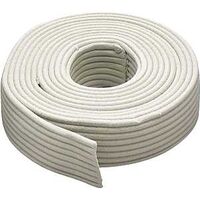
rope calk
Foam outlet and switch seals


Windows

Do you still have the old sashed windows? You know, the ones with the ropes and weights inside the woodword. We still have 6. Fortunately, only 3 are really vulnerable to the brutal NW wind, but that doesn't mean the others aren't leaking. (Here) is a video and written instructions on how to insulate these. It works! I've tried it.

If you have newer windows, they still probably leak some. You can feel around the woodwork, or use a stick of burning incense to find the leaks. Chances are, if there is open space between the woodwork and the wall, you'll see the smoke plummet toward the floor. If the smoke does anything more than waft along you have a leak. This means you have to get the calk out.

I prefer clear silicone calk. It blends in well, is paintable and remains flexible for years. But if you have a type you prefer, please use that instead. When you do begin caulking, PUSH the tube. Pulling it stretches it and doesn't get it worked into the crack. By pushing the tube, you get it worked into the crack and a far better looking bead. I wasn't a believer, but have become one since having to do a lot of calking

Repeat this process with all of your windows, not just the ones facing North or NW. It's just as cold on the South side of your house as it is the North. The air will still leak in, even if it isn't forced by the wind

Switches and Outlets

Now that you've finished the windows, it's time to relight the incense and check all of your outlets and switches. Since there should be at least 1 switch per room and an outlet about every 6', there will be plenty of checking to do. Check interior walls as well as exterior. You'd be surprised at how cool that air can be as well.

Remove all of the plates and take your incense around. Chances are you will be appalled by the amount of air moving through these tiny spaces.

Use your calk (it's non-conductive) around the outside of the boxes. Never put anything inside the box itself. It's dangerous and against codes. Most drywall is not 100% snug around the boxes, so you need to seal that space. If you think there's enough room, place some fiberglass insulation around it first, and then seal the gap.

Next, take a foam seal you bought in a packet of at least a dozen for about $2 and place it around the outlet. Then, replace the wall plate, covering all of your work.

Repeat this procedure for all outlets and switches. It's time consuming, but so worth it! This alone can save you at least 2% on your heating and cooling bills, not to mention the comfort of your home improving massively.

Doors

I hate doors. Our entire house isn't square, and moves with the seasons, so the doors are almost impossible to keep sealed well. But that doesn't stop me from trying!

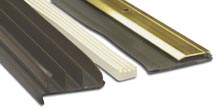
Check the weather stripping. If it's not pliable, or is cracked, you should replace it. Thankfully, this is inexpensive and easy to do. Replacement kits exist in every home-improvement store. If I can do this in less than an hour, it's easy.

Once you've checked your weather stripping, check the woodwork around your door. Often, it is like the windows, and not sealed properly. Use your calk to seal any leaks surrounding the woodwork.

And if your house IS like mine and the doors aren't set squarely, you may be able to solve some of this issue with shims behind the hinges, or even replacing the hingest themselves. I've done both to 2 different doors with great success. Both doors seal far better and work better. They latch well year 'round.

Foundation

Anytime there is a change in materials, you have the chance at air leakage. And so it goes with your foundation. This is where blocks or cement meet wood. If you are able to get to this portion of your house, you can use the expanding foam in the spaces. You can also use calk, if the leaks are small. The foam is nice for it adds R-value, and expands to fill larger spaces, or spaces you can fully reach with the calk gun.


As long as you are in your basement/cellar, look at your window and door casings here as well. Even if it is unfinished as a living space, you will still be affected by its temperature. You don't want or need cold air under your living space. Cold floors are uncomfortable.

Once you've finished with the windows and doors of your basement, look up. You have pipes and ducts going through the subflooring into your living space. Again, like the outlet boxes, it's rare for these to be sealed well, allowing air to travel along them into your living space. Depending on the size of the spaces, use calk or the spray foam to fill the gaps.

Roof

The one area of your house you WANT air flow is your roof. Keep soffit vents, peak vents and ridge vents open. Your roof needs to breath to keep from rotting. This doesn't mean it shouldn't be insulated, but the airflow is critical to the health of the roof and the house.

Finished!

Now that you've finished this work, you have now saved a full 5% on your heat bill and maybe more, depending on your leaks. Your home is far more comfortable and for little effort or money. That, to me, is the most satisfying! The last 2 days had me calking leaks that equalled nearly 1 square foot. The two rooms I worked in are now 3 degrees warmer. THAT is what this post is about.

Labels: , , , ,

Thursday, November 6, 2008

Political Trash and Recycling Campaign Crap

Now that the battle is over, what to do with the campaign-sign carcasses littering your lawn? The ubiquitous mini-billboards that were oh-so-relevant until yesterday are no more than a solid waste headache today. Here's a Three-R Rundown on cleaning up your patriotic mess.

Reduce. Too late for that -- if you'd reduced your campaign signage to zero, you wouldn't be in this mess in the first place. But hey, keep it in mind for next time.

Recycle. Most campaign signs these days come in one of three forms:
paperboard; corrugated plastic; or "poly-bags" (those are the thin, shiny ones). All three materials are technically recyclable, though the paperboard can pose a problem depending on its coating. Whether you can actually recycle any of them depends largely upon your municipality -- so check with local officials.

So far, large-scale sign-recycling efforts in Texas, Florida, and Maryland have met with mixed success. While one group of Florida counties decided to bag the effort, for instance, Palm Bay plastics recycler Mike Hazlett is beside himself with post-election glee: "We are excited to see just how many campaign signs it will take to make a 350-pound picnic table." Us too!
( FL's Work)
( DC Area)

Reuse. Here's where the fun begins: we hereby present eight (in honor of it being '08 and all) creative campaign-sign uses we've seen. Got other ideas? Let us know.

8. Sled. Everyone knows a campaign is a long, uphill slog -- so celebrate the summit by whooshing down the other side on a campaign-sign sled. Just be sure to wear lots of padding.
7. Side. Who needs vinyl? Show the neighborhood your true colors with siding made from signs. 6. Build 'em up. Chairs made from campaign signs? We haven't heard anything that divan since the FedEx furniture fiasco. Instructables.com
5. Lay 'em down. According to those who've gone this route, campaign signs are "very durable, and comfortable to walk on." And let's face it, it's fun to kick politicians in the teeth.
4. Make a birdhouse. Or a messenger bag! Plans courtesy of Les Fourmis, a group of Canadians who "get together to express themselves, share, and shake things up a bit."
3. Make a donation. At least one group -- a Texas-based bird conservancy -- wants your corrugated plastic signs, which are apparently all manner of handy when it comes to birds of prey.
2. Make ... other signs. OK, it's not the most creative idea, but it's been a long campaign season, and we're tired.
1. Keep hope alive. Use them again next time!
Swamplot shows how one home owner used old signage to cover the stairs until they could be finished.
Bicycle Mudflaps
Auto Grill Block
Reusing the wire frames

Labels: , , ,

Wednesday, January 2, 2008

Asphalt Roads Heat Netherlands

Dutch tap solar heat from asphalt roads
Posted by Martin LaMonica
A Dutch civil engineering company has designed a heat-absorbing road that bridges winter and summer.

Road Energy Systems: using summer sun to clear icy roads. (Credit: Ooms Avenhorn)
The Road Energy System, from Ooms Avenhorn Holding, is essentially an asphalt road with tubes placed underneath. Water circulates to siphon off the heat from the road and it is stored underground for several months.
The heated road, sort of like radiant floor heating in a home, was originally conceived as a way to melt ice from roads without heavy salting.
Now, with growing interest in renewable forms of energy, the system can also be used to heat and cool homes while reducing greenhouse gas emissions by 50 percent.
A current project is using the high-tech road to heat four office buildings. The stored heat is used in conjunction with a heat pump to reach temperatures high enough to warm a building.
The system costs twice as much as existing road-building techniques, Ooms Avenhorn Holdings told the Associated Press, but it should reduce maintenance and cut down on accidents from icy roads.
It's not clear how general-purpose heated roads will be. But the Road Energy System appears to work: its first installation has been operating since 2000.

Labels: , , , ,

Friday, December 21, 2007

green christmas

Obviously a work in progress...
12/21 - Recycling Your Fresh-cut Tree
http://www.realchristmastrees.org/
Make your Christmas Tree Last Longer
2 parts water
1 part uncaffienated soft drink (or corn syrup/vinegar mix)
1 penny
The acid in the soft drink/vinegar helps both the Christmas tree and cut flowers pull in more water. The sugar feeds the tree/flowers. The water - well - waters the tree/flowers. The penny?! - the penny's copper acts as an antifungal/bacterial/algal.

12/20 - from the Grist
"The Story of Stuff." Another reason to procrastinate Christmas shopping.by Katy Balatero

LED lights:
This site has the best selection
http://www.offthedeepend.com/c-23-led-string-lights.aspx
You can also find these at local stores - all are selling them now at very similar prices.

A Positive Note on LED's From TheGrist.org
The Rockefeller Center Christmas Tree will be lit tomorrow, and then we can no longer deny that The Holiday Season is in full swing. We can, however, feel a little greener while we ogle it, as the towering evergreen will be lit by energy-efficient LED bulbs and powered in part by solar energy.
see also, in Grist: Times Square New Year's Eve ball goes green


11/28
Big-Boxing Day
new in Grist: A gift guide for eco-minded shoppers headed to big-box stores
A gift guide for eco-minded shoppers headed to big-box stores Sure, it would be nice if you could buy everyone on your holiday shopping list a biodegradable, organic, hemp trivet whose proceeds support fair-trade farmers in the developing world. But let's get real -- we don't all have the time or money or inclination to track down gifts of that ilk (and Uncle Hal's never been such a fan of hemp, anyway). That's why Grist hit three big-box stores this year -- Target, Wal-Mart, and Kmart -- to see what kind of green-leaning gifts they offer. Follow expert shoppers Sarah K. Burkhalter and Sarah van Schagen as they prowl the aisles in search of bargains that are good for the planet and good for your wallet. (And if you wouldn't be caught dead in a big-box store, don't start writing that angry letter to the editor yet -- we'll soon be offering unimpeachably green suggestions for a stuff-free holiday.)

Green Christmas Tree (From The Grist.org)
Is there such a thing as an organic Christmas tree? How chemical-intensive is conventional Christmas-tree farming? If I want a Christmas tree, what's the most eco-friendly way to go?
Your fan,Lisa
Seattle, Wash.

Dearest Lisa,
Since you are not only a fan but also my senior editor, who told me you are considering purchasing your own Christmas tree for the very first time this winter, the "Christmas spirit" has suddenly come upon me.

Lisa, there is such a thing as an organic Christmas tree, and there are also Christmas-tree farms that use Integrated Pest Management (IPM). Most Christmas trees, however, are grown using conventional agricultural methods, and the growers regularly spray pesticides for various tree pests, and apply fertilizer to the plots. Why, why do they do this? It's the way they were taught, it's the way the industry works, and switching to organic involves a learning curve, potential product loss, and perhaps little financial reward if you can't find the right market for your trees.
North Carolina Extension measured the amount of active pesticide ingredient applied per tree (1/4 oz. over the tree's lifetime), while other sources point out the real damage organophosphates used on tree farms do to workers and the environment. IPM is a great system of pest management, and may be spreading as an industry practice, but it's usually hard to know if the sidewalk tree sale includes IPM trees.
A few years back I examined the artificial vs. real tree question (that column contains tidbits I will not repeat here), and came down on the side of real trees. Most artificial trees are vinyl Chinese imports (No On Vinyl!), and quite a few contain lead. Christmas party conversation fodder: Christmas décor is apparently one of the largest categories of Chinese imports.

The Rest of her answer
http://grist.org/advice/ask/2007/11/19/?source=weekly


Not finding cheap recycled gift wrap paper. WOW $5 for a 2x3 piece? Plus S&H?! Nope. I don't want to know the energy involved in making it just to say it's out of recycled.
I'd rather use gift bags - which I'll look for tomorrow. Too late now.

Labels: , , , , , ,

Thursday, August 2, 2007

Great Green House Gas Chart

This story from Christopher M. Jones, Berkeley Institute of the Environment, University of California, Berkeley

One cannot overestimate the power of consumers to influence climate change. Virtually all of the 26 billion metric tonnes of greenhouse gases released to the atmosphere each year globally from energy can be traced to goods and services consumed by individuals and households. Due to the global economy's dependence on fossil fuels for energy, every dollar spent by consumers results in the release of climate warming gases to the atmosphere. But which decisions result in the greatest impacts? Which ones can be avoided? Is reducing consumption the answer, or can we somehow buy our way out of the problem? The exact answer depends on values and lifestyle choices of each individual, but every individual can make a difference through purchasing choices.

The first step towards climate-friendly purchasing is to understand the relative contribution of consumer decisions to your total climate footprint. On average, every $1,300 consumers spend on food releases about 1 tonne of CO2 into the atmosphere and every $2,000 spent on goods (motor vehicles, clothes, appliances, household supplies, toys, furniture, etc.), also results in about 1 tonne of CO2. So, living with less stuff means fewer emissions... but, of course, it also means living with less stuff and that's not necessarily what you want
Fortunately, there are many ways for individuals to reduce their climate footprint without giving up quality of life. If you're inclined, reducing beef, dairy, and heavily processed foods could save your household several tonnes of CO2 each year. For example, research shows that completely eliminating meat would save households 1.6 tonnes of CO2 per year (equivalent to 145 gallons of gasoline), and substituting the same number of pounds of beef for chicken would save the average U.S. household almost half a tonne of CO2 per year. Buying second-hand goods (particularly clothes) and repairing or maintaining existing goods can also make a huge difference. Perhaps most importantly, if instead of buying stuff, people spent more money on services, activities and information (essentially paying for people's creativity) great fun would still be had, while helping the economy transition into one with far less environmental impact.

So how can individuals do their share? Carbon neutrality is the ultimate answer: start by reducing as many emissions as possible and then using carbon offsets to achieve the rest. See our story on buying offsets, which will help you understand how they work and how to pick high quality.

-- Christopher M. Jones, Berkeley Institute of the Environment, University of California, Berkeley. Visit Chris' consumer-based carbon calculator, www.carbonneutral.org , to better understand the direct and indirect impacts of your consumer purchases of goods and services. --

Labels: , ,